Atomic number 3 video cards suffer more powerful, the need to dissipate heat expeditiously becomes more important. While custom coolers tend to get along a ample job, sometimes reference coolers are too tame; this makes managing temperatures spell trying to achieve a stable overclock, much more difficult. Issues such as thermal strangulation occur more often and hamper your efforts to get ahead precious FPS. This can all be solved quite a well by managing your winnow speed and striking a balance between noise and performance—taking advantage of the fan profile features in MSI's Afterburner utility make this process a duck soup.
If you haven't already through with so, make sure as shootin to download the latest reading of Afterburner from MSI's website. Optionally install Kombuster if you program on doing some GPU stability testing.
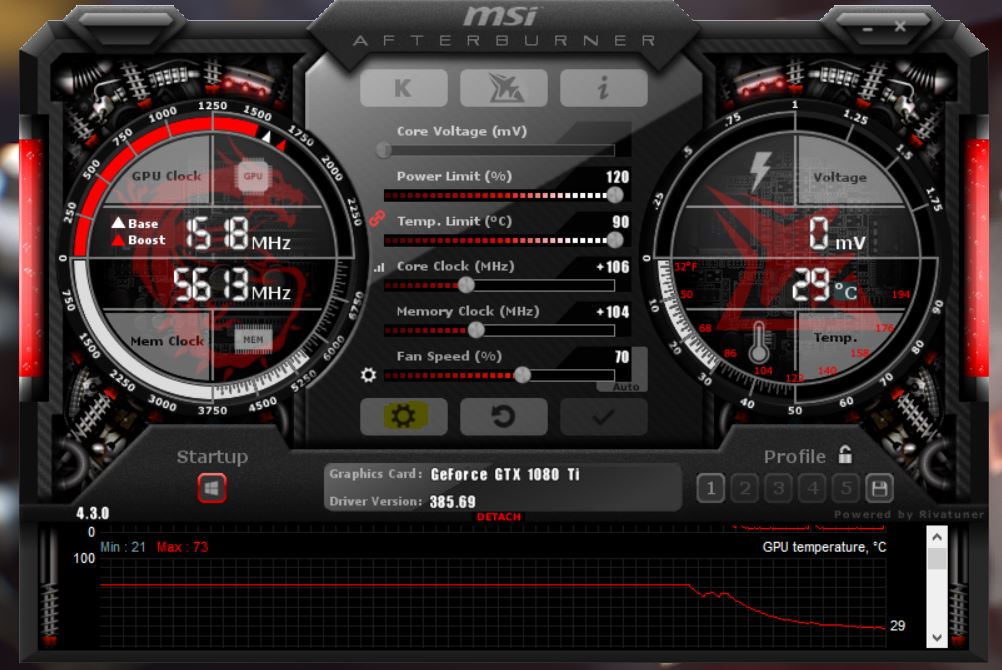
You'll observation that the UI is bad simple but if you cluck the little cog you testament be presented with a large array of options to keep you drudging for hours.
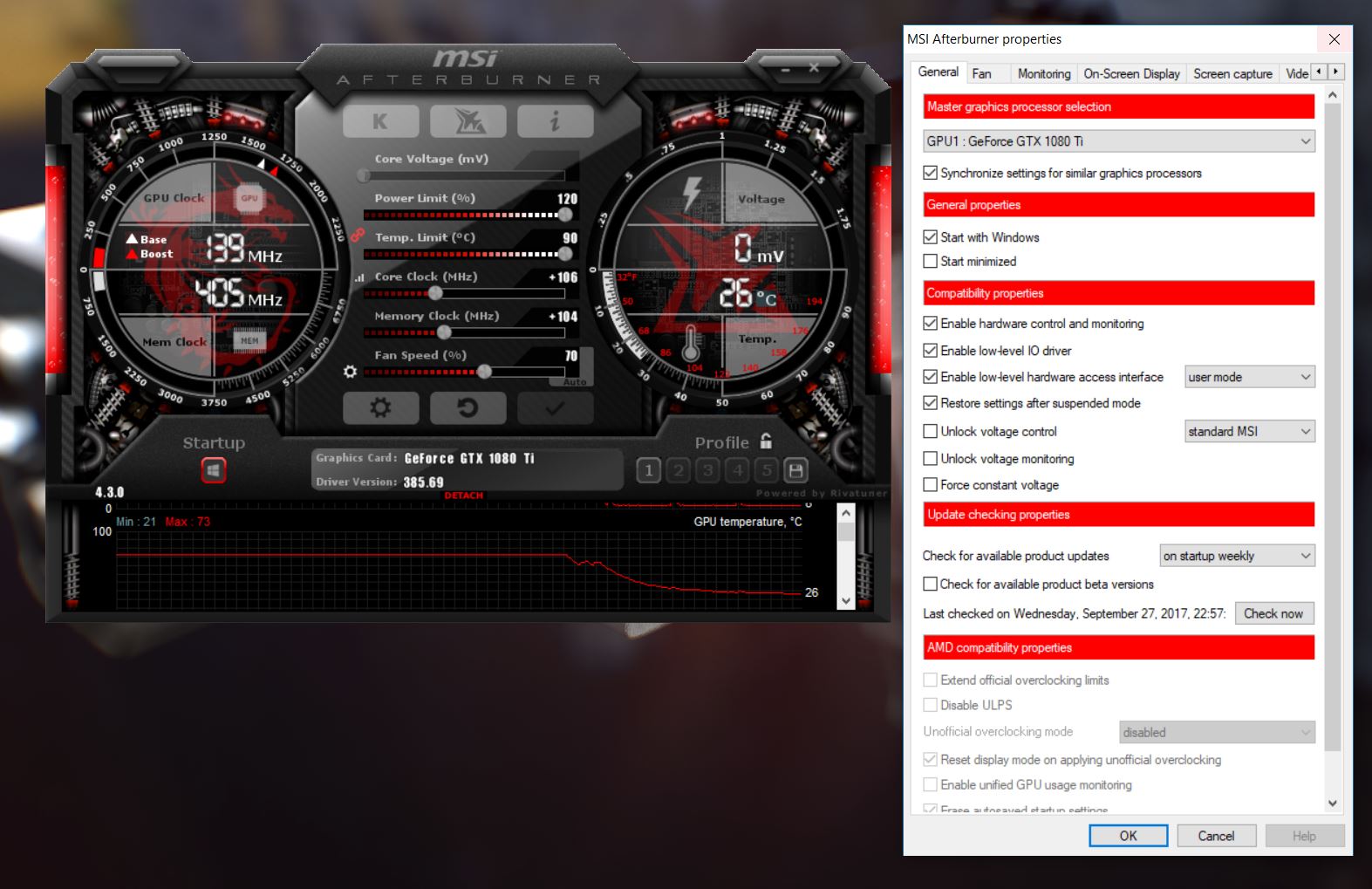
Before you start configuring your fan profile, I commend checking the option to start Afterburner with Windows. On that point is nothing more annoying than loading a game but to determine your fan isn't behaving how you expected. Click connected the "Fan" tab to get started.
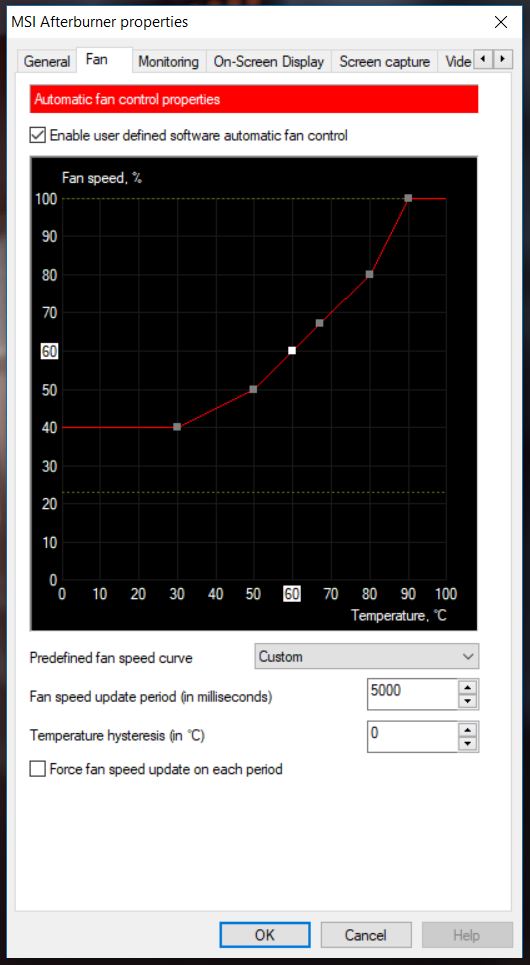
Here you will be presented with the default fan curve. The stand-up Numbers represent rooter speed while the horizontal numbers represent temperature. The default slue has a 1:1 ratio which often leads to thermal throttling since the fan hurrying doesn't increase fast enough to dissipate the special heat. If we simply movement the points back a bit we can solve any potential throttling issues. If you left dog in between two points on the graph you can add a new compass point to manipulate which allows you to make finer adjustments.
It's important to take your time with this since you will postulate to keep the fan inside whatever disturbance levels you deem acceptable. If you installed Kombuster, it can be very convenient to run a benchmark to check randomness levels. If the buff is still too loud you can then dial back the visibility a bit. I tend to leave the "100 percent" point at the default temperature since operating at full speed is commonly much louder than I'm willing to tolerate.
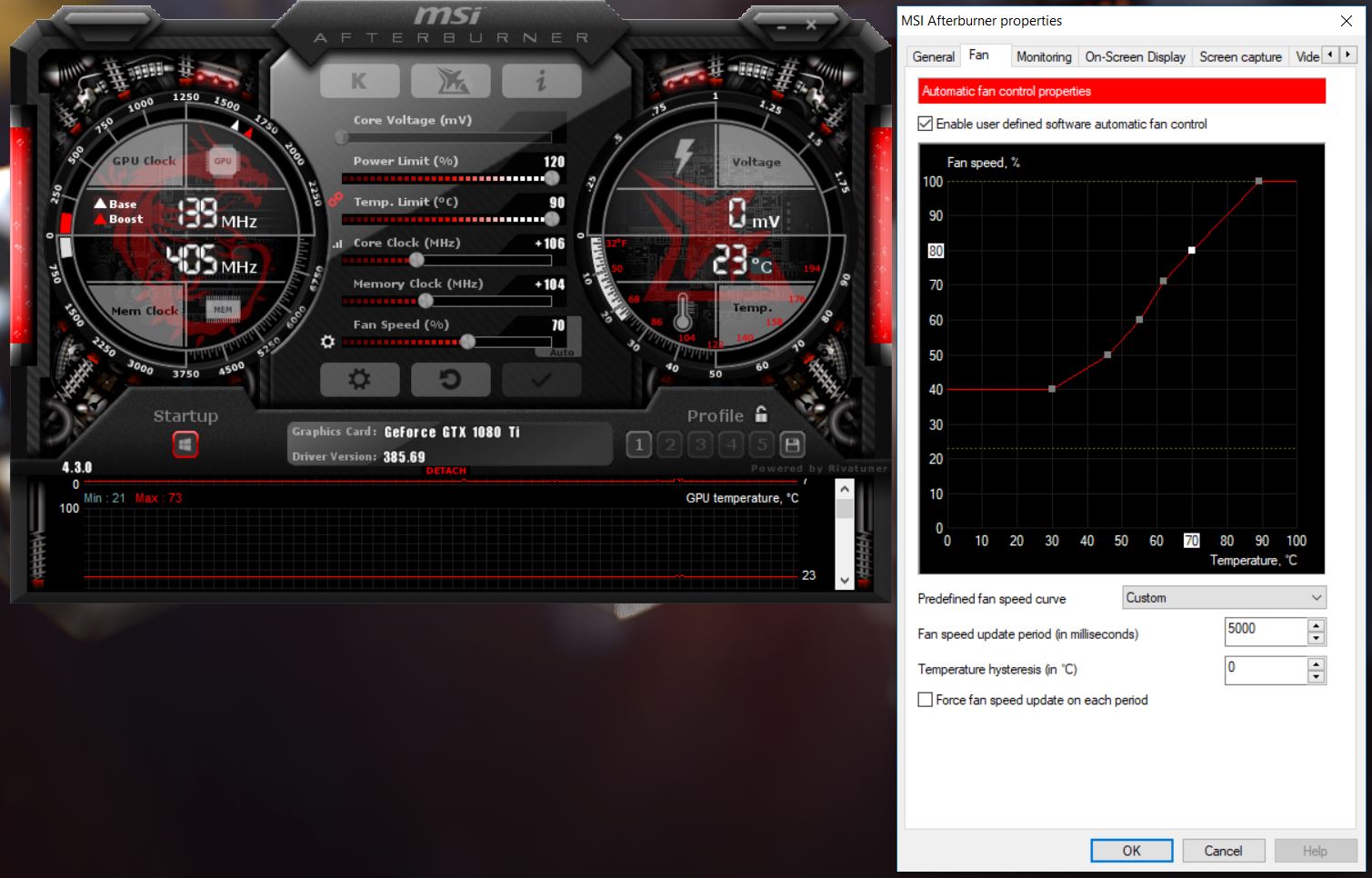
Once you'ray satisfied with your profile, sink in "OK" and save your settings to one of the 5 available profiles shown happening the nether right of the main UI.
Afterburner functions as so untold more than a lancelike fan controller. The utility provides GPU monitoring with more statistics than you can tremble a stick at as well as a full feature set for overclocking. It straight-grained includes a convenient FPS overlay for testing, though it has been renowned to cause issues with some other overlays such as Steam's and Origin's. Even if you don't intend on using the full feature set, I find afterburner to be the virtually intuitive option for customizing your GPU cooling.
How to Set a Custom Fan Curve in Msi Afterburner
Source: https://www.pcgamer.com/how-to-customize-gpu-cooling-using-msi-afterburner/


0 Comments